The Menopause
Every woman goes through a phase in her life called "the menopause" or the "change of life". For most women, this occurs between the ages of 40 and 50. During the menopause, a woman’s body changes both physically and energetically.
Two hormones that play an important role in a woman’s development are progesterone and oestrogen. Progesterone is the "mother" of all hormones. It has the ability to be converted into other hormones should the body need them. This hormone is secreted by the ovaries. Oestrogen plays an important role in the development of female characteristics, regulating the menstrual cycle and during pregnancy.
During menopause, the hormonal system is out of balance. Symptoms can vary from hart palpitations and hot flushes, to night sweats and emotional swings or mood changes. It can also cause heart problems and vascular disease as well as osteoporosis.
The menopause is a natural process for women and is certainly not an illness. However, it is often regarded as such in the West. Resistance to the menopause may have to do with resistance to the female ageing process. Also, the standards and values that prevail in today’s society influence the way we view the menopause. The pharmaceutical industry plays a role here too, confirming our attitudes. Furthermore, society tends to regard menopause, and indeed pregnancy, as things that get in the way of our working lives (as oppose to our lives).
In countries such as Japan, China and India, women seem not to suffer from menopause-related symptoms. This could have something to do with the women’s diet, but also with how they feel about growing old – women rank higher in status the older they get in these countries. This could lead us to believe that the way women think, how they view their own ageing process and their own menopause, influences the way they experience the change of life.
In Eastern medicine, the menopause is associated with certain energies in the body – the kidney energy, spleen/pancreas energy and liver energy. Liver energy is associated with the purification of the blood and the conversion of food into energy. Spleen/pancreas energy regulates the digestion and is associated with the body’s hormonal balance. Kidney energy regulates bone growth. All these energies decrease during menopause, causing bones for example to become more brittle. Spiritually speaking, kidney energy is related to wisdom, which can deepen during menopause.
So what is the best way for women to handle this change of life? Lifestyle, in particular dietary factors, influences the intensity of the symptoms. Adjustments to lifestyle can therefore help to ease the symptoms.
Some tips
Regarding diet:
- Eat a balanced diet; eat food that is easily digestible, contains natural ingredients and includes all essential elements. Such a diet would include fresh vegetables and fruit, pulses, grains, fish (especially oily fish such as mackerel, sardines, tuna etc.), nuts (especially walnuts and almonds), soya products, oils, herb- and fruit-teas. Food that has been produced naturally is much richer in minerals and vitamins than ‘treated’ food that has been subjected to chemical processes and pesticides. And don’t forget natural sweeteners such as rice- maple- and date-syrup. These all help strengthen the immune system.
- Following a diet according to your blood group is also worth considering. Certain blood groups such as O or A may be sensitive to a particular food, such as cheese.
- Eating slowly and chewing food well helps the body to absorb nutrients. It is also important to drink a minimum of 11/2 litres of water of day.
Herbs can also help alleviate the symptoms of the menopause.
Helpful herbs include:
- Sage, which can alleviate night sweating, depression, shakiness and dizzy spells. Sage also stimulates the production of oestrogen, helps reduce hot flushes and is rich in calcium.
- Ginseng is good for the body’s hormone balance and for the heart. It is widely used to alleviate symptoms of the menopause.
- Stinging nettles strengthen the bones and the heart, and restore the functioning of the kidneys and adrenal glands.
This is just a selection of herbs that may help during menopause. They should always be used in moderation and one herb should never be drunk in large quantities. Varying your intake will lead to a balanced use and more effective results.
It is best to avoid cows’ milk. Milk and cheese contain a protein that is difficult for the human body to absorb. Traces of it remain in the intestines, which can lead to mucus formation and a reduction in the absorption of potassium through the mucus membranes. This places a huge demand on the digestive system’s energy resources. The body can obtain all the calcium it needs from green vegetables.
Other products that can have an adverse effect on the body during the menopause are: sugar, red meat, coffee, cocoa, black tea, alcohol and nicotine. Alcohol affects the blood sugar level in the body. Research has shown that women who smoke enter menopause earlier than non-smokers – the ovaries of smokers produce less than those of non-smokers.
The pharmaceutical industry puts a lot of pressure on doctors to sell its products, such as Premerin, one of the highest sellers amongst synthetic drugs in the US. Unfortunately, little energy is put into the development of natural medicines, because it is forbidden by law to take out a copyright on natural hormones. There is no profit to be made in the pharmaceutical industry investing in such development.
It goes without saying that stress and high expectations (lots of "musts") will exacerbate menopausal systems! It is important therefore to get enough sleep, and to sleep deeply. Physical exercise (such as yoga, stretching or T’ai Chi) will also help, as will massage, such as Shiatsu.
As I’ve mentioned, herbs can offer great relief during the menopause. They are a natural product without side effects. Recommended books include: Marilyn Glenville "A Natural Alternative"; Susan Weed "Menopausal Years" and "Healing Wise"; Annemarie Colbin "Food and Healing".
The following positions alleviate the symptoms associated with the menopause
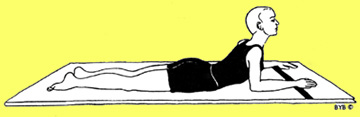
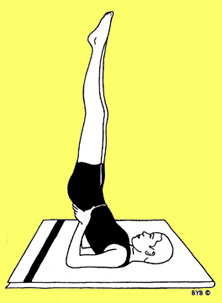
(The above exercise in which the body is inverted should not be done immediately after eating, while menstruating, if you have a brain tumour or have had a brain haemorrhage or are suffering from high blood pressure.)
An Encounter with the Stomach, Spleen & Pancreas Energies
"The guardians of the treasury"
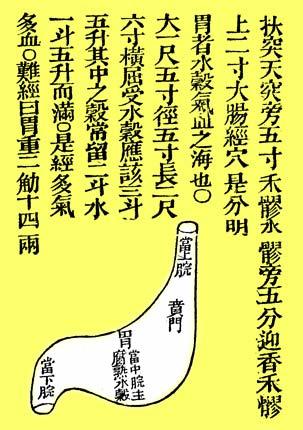
In the old texts of the Yellow Emperor, the stomach is described as being "head of the storehouses and granaries", where rotting and ripening occurs. Stomach and spleen/pancreas energies are associated with the autumn, where the earth is still, ready for change.
The stomach energy is most active from 07:00 - 09:00 hours and the spleen/pancreas energy from 09:00 -11:00 hours. This indicates why breakfast is so important before going to work, as well as why the main meal of the day used to be eaten around midday. In many countries this is still the case. It could be said that who wants to put on weight should eat late in the evening, when the digestive system is least active!
The spleen
In the Chinese five elements, both stomach and spleen/pancreas energies are associated with "earth", our foundation, giving us stability and providing us with food. Centrally located in the body, their energies relate to the feeling of balance, emotionally as well as nutritionally. Fear arises when this stability is threatened, as in earthquakes and on an emotional level when we feel unsupported, 'undernourished' by a relationship with someone/something.
Earth's nature is dense and porous, providing a home to all plants that need a place to grow their roots. The earth element is therefore related to the bearing of children and establishing solid relationships.
To digest or not to digest…?
The physiological ability of the stomach and spleen to receive is so crucial to the maintenance of balance; to the process of nourishment physiologically, as well as emotionally and intellectually. To maintain balance, we need to be able to take something in; process and absorb it, then let go of it. Here I'm referring to food as well as to ideas, experiences and to emotional responses. Disturbance of this natural process leads to mental and physiological constipation, whereupon body and mind become rigid.
In my own clinical experience with cases where earth energy is weak, I have found that the person is unwilling to love, care for and 'nourish' themselves.
The stomach
Being concerned is also related to the stomach and spleen energies, excessive concern indicating imbalance. A common example: women in the role of mother, caring for everybody except themselves.
The English saying that someone doesn't "have the guts" (stomach) to do something reflects the stomach energy's relationship with courage. Perhaps this is why the image of a firm, muscled belly is so desired by many.
Too much thinking
Spleen energy "nourishes" the ability for abstract thought. Imbalance will lead to mental fatigue and the tendency to worry excessively.
The earth element's spiritual aspect is called the Yi, meaning both 'verbally expressed thought' as well as 'heart and mind'. The latter relates to the balance and the communication between your center (hara) and the mind. Whenever physical security is lacking (deficient earth energy) we seek reassurance and reality in intellectual concepts and structures. This is the link I've often spoken of in the lessons between stomach/spleen energy and too much thinking!
Other symptoms which may occur when earth energy is unbalanced are lethargy and purposeless mental hyperactivity.
Red cheeks often indicate that the stomach energy is too strong, whereas deficient stomach energy causes a lack of appetite; lack of strength in the legs (especially upon climbing stairs); knee problems and tension around the neck or shoulders.
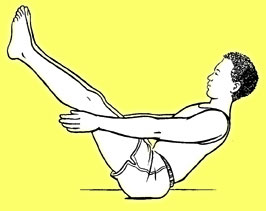
Recommended exercise
Do; Re; Mi…
Any professional singer will tell you how important it is to sing from the stomach, not from the throat. Melodious singing is related to the energies of both stomach and spleen. The voice may fluctuate in order to convey empathy, yet indicates imbalance when it becomes a permanent feature of a person’s way of speaking.
Elements related to stomach & spleen energy
A fragrant odour indicates balance between stomach and spleen; disharmony gives a sickly-sweet odour to the breath. The tongue is related to stomach and spleen energies, being the beginning of the digestive system (actually desire may be the beginning!); the need for oral satisfaction (e.g kissing and/or smoking) and being able to taste the 5 tastes (bitter; sweet; rancid; sour; salty). Imbalance may lead to the inability to taste anything. Disharmony may lead to mouth ulcers; to cracks in the corners of the mouth; bleeding gums or to cold sores.
To like or not to like…
"Like" and "dislike", are not only manifested when children refuse to eat certain things; adults can be also choosey. More importantly, what are the underlying fears or pleasures which lead to rejection or acceptance of something? And to what extent and in what ways do we reject or accept ourselves?
The taste connected with spleen and stomach energies is sweet. Imbalance in these energies can lead to a craving and excessive consumption of sweet-tasting food (the "cookie monster syndrome"!).
The function of the spleen/pancreas organ is to transform and transport nutrition it receives. The essence extracted from food is then sent upwards to the lungs from where it can be circulated throughout the body, particularly to the muscles and tendons. The amount of muscle volume a person has is related to the strength of this function. Imbalance will show when the stomach becomes distended ("beer belly") or when the body looks emaciated.
Food essence received by the lungs is transported to the heart which makes blood from it. Imbalance in the spleen's function can cause: dizziness; scanty/irregular menstruation; anaemia; insomnia; depression; blood in the stools, sputum or urine; painful urination; broken capillaries; nose bleeds; varicose veins and excessive or prolonged menstruation.
Another important aspect of spleen energy is that it maintains the position of your body organs. Imbalance can cause the uterus, bladder, stomach or other organs to move downwards and can lead also to haemorrhoids. It will also cause the cheeks, jaw and breasts to sag. An irregular menstrual cycle and tenderness of the breasts also indicate imbalance of the spleen energy.
Manipura Chakra
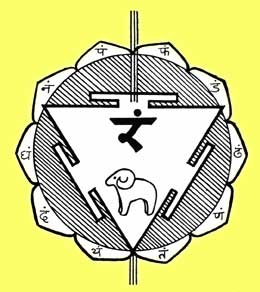
The word Manipura may be divided into two sanskrit words – mani, meaning "jewel" and pura, meaning "city". According to Tibetan tradition it is known as mani padma, meaning "jewelled lotus". An important center for the awakening of kundalini energy (that lies sleeping in the pelvic region), it is also associated with dynamism, energy, will and achievement. Considered to resemble the dazzling heat and power of the sun, it radiates and distributes energy throughout the entire body, regulating and energizing organ functions, systems and life processes. When this energy is reduced one will experience a lack of vitality; depression; be hindered by poor health and have little motivation or commitment in one's life. Therefore the awakening of manipura chakra ought be high on the list of priorities for anyone wishing to enjoy life more fully. Manipura is connected to the solar plexus, controlling the digestive fire and regulating the body temperature.
Manipura's organ of knowledge is the eyes; its organ of action the feet – indicating the interdependent processes of vision and willful action.
The ancient texts tell us that yin and yang energies merge into each other in the stomach area, and in the ancient yogic texts (the Vedas) we are told that the primal, animal aspects of our energy are transformed into a more spiritual, more refined energy upon rising to the level of manipura chakra (located opposite the navel, in the spinal column). Meditation upon manipura chakra can lead to knowledge of the entire physical system. Purification and awakening of manipura leads to a disease-free body, which becomes luminous and where consciousness no longer recedes into the lower states (those of mooladhara and swadisthan chakras, where the higher states of consciousness cannot be seen).
The psychic experiences one may have upon awakening of manipura chakra, are infused with compassion, unlike those experienced in the lower chakras.
Bladder & Kidney Energies
According to Traditional Chinese Medicine, the energetic characteristics associated with these organs are related to the winter period; to an ice cold climate and to the water element. During the winter period, everything in nature that grows, recedes and returning to the core. For example the seed or the bulb store energy that will be used again for germination and growth in the springtime. In a similar way the store of energy in the kidney’s support and initiate the growth of our bones, teeth and the hair on our head.
Support is given to the function of the ovaries, the womb, the testicles and the prostate. The production of sperm and of spoor cells is stimulated. In fact all the reproductive activities including sexual impulses, ovulation, ejaculation, fertility and pregnancy are supported by the energy of the kidneys.
The kidney energy is most active between 17:00-19:00, that of the bladder between the hours of 15:00-17:00.
De galblaas energie is meest actief tussen 23.00 - 01.00 uur; de lever energie tussen 01.00 - 03.00 uur 's ochtends.
Kidney energy is our energetic DNA
The kidneys contain your primitive, prenatal essential energy. This physical and cultural inheritance can be traced back across millions of years of evolution, passed on from generation to generation. As such it can be considered as a form of energetic DNA which dictates our future. In this way the kidney energy works together with the structural proteins which produce hormones and enzymes to support our cellular metabolism. The strength of the kidney energy at birth is related to the condition of the kidney energy of your mother and father at the time of conception. After birth the kidney energy can be strengthened depending on the nutritional value of the food you consume.
Whilst the kidney energy can be stimulated and its demise slowed down, it is impossible to increase it. The amount and strength of the kidney energy at the time of conception is progressively reduced as we grow older, leading to such symptoms as baldness; greying of the hair; deafness, degeneration of the teeth and increasingly brittle bones. The latter symptoms occur owing to the reduction in the amount of calcium in the bones, which in turn supports the production of red blood cells in the bone marrow, which remove carbon dioxide from the body, via the lungs.
The symptoms of menopause are also related to this reduction in kidney energy, as is excessive, chronic stress, leading to "burn-out". To conclude, it can be said that the kidney energy is directly connected with your physical growth and your mental maturity.
The kidney energy can be compared to the roots of a plant.
The kidneys absorb moisture, which is then used to moisten and to feed the bodily functions. It is also capable of giving off heat in order to activate the body. Weak kidney energy leads to regularly having cold hands and feet; frequent urination and to easily suffer from infections. The strength of desire to be enterprising will also be weak.
Strong kidney energy creates a strong willpower and supports your potential for creation and growth.c According to Harriet Beinfield & Efrem Korngold in their book "Between Heaven & Earth" “when the kidney energy is strong you will not be disturbed by a cold climate.
The digestive system will be both strong and dependable and during your entire life you will enjoy a strong sexual potency (no need for Viagra !).
Kidney energy in relation to other organ functions
The kidney is capable of storing energy emanating from the lungs, the stomach, the spleen-pancreas and the small intestine, holding these energies steady, just as an anchor holds a boat in one place. As a result the depth of the inhalation and the distribution of oxygen are promoted. Because the kidney forms the foundation of all liquids in the body, any stagnation of this energy can lead to oedema of the lower abdomen, in the knees, ankles, hands, the tongue, between the eyebrows and in the upper eyelids. The kidney filters liquids, extracting the pure from what is impure. What is pure is recirculated around the body via the lungs, whilst urine is produced from that which remains. The kidney energy regulates the elimination of faeces and the production of blood related the menstruation process.
The kidney energy and your spirit
Kidney energy promotes your spirit, (your "shen"), which is seated in the heart. "The spirit of the kidneys (the zhi), rules the will, the drive, the ambition and the survival instinct" according to the book "The Yellow Emperors Classic of Chinese Medicine". On the psychic dimension the kidney energy is related to anxiety and the impulse to flee from something. At the same time, anxiety can motivate you to strengthen things in your life. In the words of Qi Bo, the wise adviser to the Yellow Emperor "Thus the body of one who understands the Tao (laws of nature) will remain strong and healthy. The one who does not understand the Tao will age. One who is careless will often feel deficient, whilst one who knows will have an abundance of energy…. Even though their bodies are old they can perform most of life’s activities. Those who understand the principles of wholesome living tame their minds and prevent them from straying. They do not force anything upon themselves or upon others, are happy and content, tranquil and quiet and can live indefinitely. These are the ancient methods of self-maintenance".
The Bladder energy – "the minister responsible for the provinces as the cities"
Bladder energy is related to the function of storing body fluids. Its second task is to transform the Chi, (Ki, Prana), a function that earned the title of "the minister responsible for both the provinces as the cities". In other words the bladder energy is in charge of a good distribution of Qi between all parts of the body as well as between the different organs mutually. Bladder energy flows along the two sides of the spinal column and together with that of the kidney, along the back of the legs. Kidney and bladder energy have a huge influence on the nervous system, its sensitivity, your stress "housekeeping", the condition of your lower back and lower abdomen. In this respect the bladder energy is treated in cases of allergy, an extreme neurological objection to and rejection of something. Because the sacrum and lower abdomen reflect the condition of the bladder and kidney energies, it seems logical that they also be influenced by the first and second chakras, mooladhara and swathishana. In the book Kundalini, by Gopi Krishna he states that "the chakras represent the nervous plexus which regulate the different organs". At present there is no mention as to which organ relates to mooladhara, owing to its relation to sexual impulses it seems likely that mooladhara is related to the kidney energy. Other similarities between mooladhara chakra and the kidney energy are: a lack of vitality when mooladhara chakra is weak as well as feelings of emotional insecurity and anxiety for the future. When mooladhara is active any feelings of insecurity disappear, despite the situation in which you find yourself. Swadisthana chakra is related to the "hunter" instinct which stimulates the desire to search for sexual contact. This is also very similar to the characteristics of the kidney energy. The two "nadis" which flow along the sides of the spinal column, Ida on the left and pingala on the right, flow over the same area as the bladder energy and the place between the eyebrows where the two nadis meet, is just above the corners of the eyes, next to the nose, where the two flows of the bladder energy begin. Chronic misbalance between the flows of ida and pingala nadis can lead to symptoms such as manic depression; paranoia or of psychosis.
Rest & moderation
Whilst regular rest and moderation in daily life have a supporting and stimulating influence on the kidney energy, we all live in a world where the exact opposite is promoted. Some examples of the do’s and don’ts: Ceasing all work related tasks a few hours before going to bed; going early to bed and rising early; not eating just before going to bed or whilst working; eating food with a high nutritional value, such as organic vegetables, rice and beans; avoiding alcohol or stimulating drinks such as coffee, no cigarettes or narcotics; not exceeding ones limits on a regular basis and lastly no excessive sexual activity! And whilst conforming to the above, not letting yourself feel pressured or setting yourself high demands which lead to stress.
Meditation
Regular and daily meditation prior to sleeping and upon rising the next day will strengthen and reduce the speed of decline in the kidney energy. Many thanks to Kundalini Tantra by Swami Satyananda Saraswati, Bihar School of Yoga, India
A meeting with Heart & Small Intestine Energies
"The spirit is infinite; on the other hand the body is finite"
The heart according to western and eastern methods of healing
Approximately 400 years ago Descartes, upon whose theories western medicine is based, considered the heart to be nothing more than pomp. According to the many centuries old Chinese texts called the Neijing Suwen, the heart should be considered as the "Lord Sovereign", the sovereign master responsible for our spirit (our Shen) and our sparkle
The essence of the heart and small intestine energy
By nature the heart is expansive, communicative, radiates light and is related to the fire element. The heart energy is therefore associated with the summer. The energy is most active between 11:00-13:00. Its partner the small intestine is active between 13:00-15:00.
How these energies affect us
The expression to "do something with your heart" indicates its relationship between body and mind. Furthermore it is the strength of our soul which keeps us alive and which accelerates the process of healing. When you meet a person, try to recognise if their eyes are sparkling, if they speak passionately, with exuberance or with a stammer and to what extent they express a love of life (joie de vivre). The above mentioned factors along with the degree of elasticity of the skin indicate the condition of the heart energy.
Further characteristics of heart and small intestine energy
The heart energy is known in the ancient Chinese texts as the "President and his Envoy", both responsible for pleasure and ecstasy. The hart is connected to the pericardium (the hearts envoy), to the diaphragm and the solar plexus. All three regulate internal circulation, the expansion and contraction of the heart and the unobstructed movement of the breathing and lastly they help protect the heart from emotional disruption. Small intestine energy flows along the front of the ears, along the sides of the neck, over the shoulder blades and along the back to the buttocks. In this way it strongly influences mobility and the symptom called "frozen shoulder", stiffness in the neck and hearing disabilities can indicate a disturbance in small intestine energy.
Digesting food and emotions
The process of digesting food which began in the spleen-pancreas and stomach, is continued in the small intestine which separates the pure from the impure substances. When the essence of the food has been transformed, the pure food essence is transported to other organs, such as the lungs and to the limbs via the spleen. The impure waste is transported to the large intestine and the bladder. Small intestine energy protects the heart, deflecting dangerous influences in the same way as a connoisseur separates poisonous food.
Whilst five people could eat an apple, each apple will be digested differently according to the individuals nutritional needs and according to the way that an individuals digestive organs function. Insufficient assimilation of food essence can be attributed to a person’s lack of recognition of unpleasant emotional memories or the difficulty in accepting ones emotions; information is then not integrated and made available to the consciousness. (Shiatsu Theory & Practice, Carola Baresford Cook)
Disturbances and their effect
We all need to do things that we would rather not do. Yet when this becomes a chronic part of our daily life, the energy of the mind and soul are weakened. The heart rules over all other organ functions, so you can imagine what kind of effect a weakening in the strength of spirit will have, especially if the condition continues for a number of years. Much or our day is spent working in order to earn money, so it is very important that we have a high degree of contentment in the work we do.
The affairs of the heart, those which stir the soul, such as being in love, the tensions and disappointments which exist in an intimate relationship, or those caused by not having a relationship, all have a direct influence upon the energy of the heart, the function of our organs, our blood circulation and our mind. It is not unusual that a person becomes overcome by melancholy when the energy of the heart is weak and insufficient. When the energy of the heart is excessively strong a person will be prone to laugh continuously and hysterically.
Anxiety, certainly when present for long periods will hurt both the spirit and the mind. In extreme cases anxiety can lead to shrinking and a stiffening of the bones, to emaciation or dulling of the skin and amount of hair on the head. Insomnia and disturbances in the rhythms of sleep also occurs when the energy of the heart is out of balance.
Connections with other organ functions
Both the heart and the small intestine are both made from the same kind of tissue during the development of the foetus. Recently Japanese scientists have discovered that the blood is produced in the small intestine and only produced in the bone marrow during periods of abnormally high stress, for example during vesting or loss of blood (Revolution of biology and Medicine. Kikuo Chichima)
The heart regulates blood circulation and the supply of oxygen, giving the blood its red colour. Afterwards the blood nourishes the entire body, in a similar way to when we water the plants in the garden. The condition of the blood vessels is ruled by the heart, whilst the energy related to the spleen-pancreas keeps the blood within the blood vessels. The immergence of varicose veins indicates that the function of the spleen-pancreas is disturbed. The small intestine energy is also related to blood circulation; the condition of the ovaries and menstrual functions. According to Traditional Chinese Medicine the blood functions as an ‘anchor’ for the spirit (called the Shen).
The quality of your blood is nourished according to the kind of food you consume; by the quality of air we breathe and by the way we breathe.
The inter-relationship between consciousness and vital energy
The relationship between the heart and small intestine energies is one which relates consciousness (heart) with that of vital life energy (Ki, Chi, Prana). In the upper body, the hart integrates the energies emanating from emotional and sensory impressions into our consciousness, whilst in the lower body the small intestine energy integrates essence taken from food, which then produces blood and Ki.
People I have treated who suffer from Repetitive Strain Injury (R.S.I) have a lot of heat in the upper body, especially in their head, where they "live" during long periods of the day. In contrast the lower body is cold and isolated from communication. The following symptoms can develop whenever the function of the small intestine energy is disturbed: nervousness; restlessness; poor digestion; low in energy; anaemia; constipation or diarrhoea.
The connection between the heart and higher states of consciousness
Heart energy is related to higher states of consciousness and to levels of inspiration in your life. Yoga considers the heart chakra (Anahata = the unconquerable) as the seat of purity. "Only when you reach anahata does one become a yogi..until then you are a practitioner of yoga. In (the condition of) anahata one becomes a yogi because one is completely established in yogic consciousness and you depend solely upon the power of your own consciousness, rather than anything that is external or concerned with faith. Anahata chakra can be aroused and awakened through the practice of bhakti yoga, in which there is no place for egotistical consciousness" Swami Satyananda Saraswati, Kundalini Tantra.
It is stated by yogis that the present phase of human evolution is one of anahata chakra. The heart chakra is situated behind the centre of the chest bone opposite the inside of the spinal column and is directly connected to the centres of the brain responsible for creativity; the fine arts, such as painting, music, poetry etc. In this area thoughts and desires are materialised and fulfilled. Until consciousness begins to ripen at the level of the heart chakra, you will be controlled by your destiny. Once this ripening process is completed you become totally independent of all influences.
At the base of the image of anahata chakra, a tree can be seen, the Kalpa Taru. When this tress begins to bear fruit, everything that you think or desire becomes reality. Perhaps it is fortunate that this is not yet the case with the majority of us!
Lung & Large intestine energies
Chinese Medicine considers the lung and large intestine energies to be related to the characteristics of the autumn. In autumn is a period of the year in which nature is involved in a process of letting go, of drying out and of reduction in size. For example the falling leaves from the trees. This process conforms to the physiological process in the large intestine. The energy of the lung is also related to the ability to let go, for example emotionally. The energy of the lungs is most active between 03:00 – 05:00 hours and the energy related to the large intestine between the hours of 05:00 – 07:00.
Lung energy
The lung energy works together with that connected to the heart, the spleen pancreas and the kidneys. The energies of the lung and large intestines control the general circulation of essential energy in the body, known as either Qi, Ki or in yoga as prana. A disturbance in this energy can lead to less Qi circulation, causing symptoms such as: tiredness, depression, sadness and asthmatic ailments. Alternately the amount of Qi circulating could be excessive, causing headache, anger and hyperactivity. Qi is the primitive energy that is present in from your birth. Prior to that during the period in the womb, your Qi is sustained by that of your mother. Qi is also gained from the quality of air we breathe and the energy level of the food that we eat. In this respect the energies related to the lung and the spleen pancreas resemble each other. The lung energy is strongly connected to the skin and the nose, the sense of smell. Remember how difficult it is to smell anything when you have a cold. Because the nostrils are directly connected to the brain they can be considered as entrances which influence the interaction between the body and the mind. We breathe through the skin as well as through the nose and the mouth. The skin serves as an important barrier to illnesses and micro-organisms coming from the outside environment and this is also true on the level of energy (Qi), as this energy dictates the function and the form of everything and everyone. The skin and the nose can be considered as important meeting places of interaction and exchange between the external and the internal environments, for instance our ability to experience differences in temperature. The lung energy also regulates fluids in the body. Children who have problems with asthma at a young age, also have problems with eczema when they grow older. This clearly illustrates the connection between the skin and the energies of the lung and large intestine. The lung energy and the physiological function of the breathing are related to expression, such as the "boys do not cry" attitude or the tendency to suppress anger. People who have problems with emotional expression very often also have problems with eczema, asthma, constipation or diarrhoea. The lung energy regulates the amount of body hair, but not the hair on the head. Also the tone and the strength of the voice, the lower the lung energy, the softer and weaker the voice will be or it will disappear altogether (losing one’s voice). The cries of the market traders, or those of children, are examples of strong lung energy.
Large Intestine energy
The functions of the large intestine are principally: receiving, transit (forwarding), the transformation of liquids taken from the food remnants, the production of vitamin k and lastly elimination of faeces. Vitamin k stimulates the production of prothrombin in the liver, which is related to the process of blood clotting and with the synthesis van a large number of proteins. The large intestine function is considered to be more energetic than that of the lung, owing to its support of the lung function. The elimination process becomes disturbed when the energy of the large intestine in weak, causing diarrhoea or constipation, stiffness or weakness in the wrists, pain in the gums, or nasal obstruction. A swollen or cold abdomen and weakness in the knees or ankles can also stem from a disturbance in the large intestine energy.
Spiritual aspects
According to Chinese Medicine the energy of the lung is related to the "animal soul", namely the instinctive reactions and the involuntary physiological functions in the body, such as the heat beating. It is said that the "animal soul" ceases to exist at the time of death. Yoga texts state that ‘if you can realise the true reality of the breathe, you can realise the soul ("atma") Here the word "breathe" referrers to one way of connecting with your body and the material world of form, which is called the "Jing".
A meeting with Liver & Galbladder Energies
The liver fulfils many tasks such as the production of gal and antibodies; regulating the blood sugar levels as well as the hormonal, protein and fat metabolisms; the storage of vitamins and the detoxification of the blood. The liver organ regulates the function of the spleen, whilst the lung regulates the liver. Both the liver and the spleen circulate blood and nutrients taken from the food consumed. Disturbances in the digestive system can occur as a result of a disturbance in the interaction of these three organs. This can cause any of the following: irregular appetite, flatulence, heart burn, spasmodic pain in the stomach and intestines and to the development of gallstones. The energy of the gallbladder is most active between 23:00-01:00 hours, that of the liver energy between 01:00-03:00. The characteristics of both the liver and the gallbladder are related to those of the spring time, a moment in the year when there is a huge amount of growth and expansion in nature, visible in all forms of animal, tree and plant. Consider the shear strength that a blade of grass displays whilst pushing upwards from the earth to grow. Have you noticed how your own energy and frame of mind is influenced by the spring time?
The wood element and you
According to the ancient system of healing based upon the 5 elements, the liver is related to the wood element, which is associated with strength and regeneration. Men experience this by their need to attain goals in life. Women are more conscious of this in their monthly menstrual cycle; each cycle having the power to give birth to new life. Apart from the wood elements relation with the menstrual cycle it is also related to the menopause (taking - a – pause from men!), which announces a beginning as well as an end. When the liver sends heat to the blood, the menstruation will be copious and heavy. This can also cause nose bleeds, or bleeding elsewhere in the body, such as piles. The liver energy is also related to the strength of the male erection. Wood has to be supple and to bend with the wind in order to remain strong as well as to grow alongside other plants and trees. The growth of wood must adapt equally to its environment as its own needs, visible by the forms that many different trees and plants assume whenever they have to share water and light with each other. The wood element is related to your ability to realise and assess your individual strength and to take into account the needs of others around you. The liver energy dictates the flexibility of your muscles and tendons. People who lack the ability to be supple move their body in a rigid, stiff manner. Their decisions and ways of organising things are also uncompromisingly rigid.
Screaming & anger
On the emotional dimension, anger is an expression of the liver energy, for example the loud voices and outbursts of anger caused by excessive alcohol consumption. Another example is the need to scream or the habit of talking very loud in order to gain the attention of others. Supressing anger makes the voice softer, which can be compared to keeping the lid on a pressure cooker!
Liver energy
The liver energy distributes Ki, (Chi or Prana) to all parts of your body, indicating the aspect of vitality related with the liver energy. In cases of stagnation the energy rises, which disturbs the energy of the gallbladder. The face becomes red, the head feels hot and under pressure (as in response to anger) and a one-sided headache can be felt. In extreme cases this ascent of energy can lead to aggressive behaviour. Emotional and physical energies are stored up in the liver and the gallbladder, leading to emotional instability and to outbursts of emotion that are swiftly brought under control, as is the case in premenstrual syndrome. The liver energy can create hyper-sensitivity towards others, considering others as objects which obstruct your path. "Upon waking, consider each morning as a new cycle, the beginning of a new day in your life" Stagnation of liver energy creates physical and mental restlessness, which can cause insomnia. Not feeling rested upon waking up, can indicate that the liver & gallbladder energy is disturbed. Every evening your blood passes through the liver in order to have toxins removed. The following morning the cleaned blood is sent back to the heart to be circulated. This process is much less effective when sleep is disturbed, and toxins build up in the blood. This in turn leads to pain, infections and rigidity in the tendons and muscles. The eyes are needed to find your way and to calculate situations correctly. They are also dependant on huge amounts of blood. Disturbances in the liver energy cause the eyes to become red, dry and irritated. Further examples of symptoms are short sightedness (myopia) and far sightedness (presbyopia). Repetitive Strain Syndrome (RSI) is caused by excessive use of the eyes, for example sitting for hours in front of a computer screen, which reduces the flow of blood from the liver to the eyes. In time this goes on to disturb the function of the tendons and their connection with the joints in the body. Other symptoms associated with disturbance of liver energy are: dry skin and hair, dizziness (vertigo), depression, poor memory, spots before the eyes, weak and fragile nails and lastly pelvic instability. The energy of the liver is related to the etheric aspect of the soul, called the ‘hun’. This gives ‘colour’ to your life as well as to your soul.
Liver, spleen and lung energies
Disturbances in the energetic relationship between the liver and the spleen- pancreas create conflicts between the following:
- desire for change and stability
- adventure and continuity
- hyperactivity and inertia
- impulsiveness and difficulty in making decisions.
When the energetic relationship between the liver and the lung becomes disturbed a struggle occurs between the need to be expressive or restrained and subdued; between enthusiasm and indifference; between spontaneity and aloofness; between chaos and order.
An Encounter With Stomach & Spleen Pancreas Energies
"The guardians of the treasury"
In the old texts of the Yellow Emperor, the stomach is described as being "head of the storehouses and granaries", where rotting & ripping occurs. Stomach & spleen pancreas energies are associated with the autumn, where the earth is still, ready for change.
The stomach energy is most active from 07.00 - 09.00 hours and the spleen pancreas energy from 09:00 -11.00 hours. This indicates why breakfast is so important before going to work, as well as why the main meal of the day used to be eaten around midday. In many countries this is still the case. It could be said that who wants to put on weight should eat late in the evening, when the digestive system is least active!
In the Chinese five elements both stomach and spleen pancreas energies are associated with 'earth', our foundation, giving us stability and providing us with food. Centrally located in the body, their energies relate to the feeling of balance, both emotionally as well as nutritional. Fear arises when this stability is threatened, as in earth quakes and on an emotional level when we feel unsupported, 'undernourished' by a relationship with someone/something.
Earth's nature is dense and porous, providing a home to all plants that need a place to grow their roots. The earth element is therefore related to the bearing of children and establishing solid relationships.
To digest or not to digest....??
The physiological ability of the stomach and spleen to receive is so crucial to the maintenance of balance; to the process of nourishment physiologically, as well as emotionally and intellectually (the processing and the digestion of thought and ideas). To maintain balance, we need to be able to take something in; process and absorb it, then let go of it. Here I'm referring to food as well as to ideas, experiences and to emotional responses. Disturbance to this natural process leads to mental and physiological constipation, where upon body and mind become rigid.
In my own clinical experience with cases where earth energy is weak, I have found that the person is unwilling to love, care and 'nourish' themselves.
Concern is also related to the stomach & spleen energies; excessive concern indicating unbalance. This is often the case with women in the role of mother, caring for everybody except themselves.
The English saying that someone doesn't 'have the guts (stomach) to do something reflects the stomach energy's relationship with courage. perhaps this is why the image of a firm, muscled belly is so desired by many.
Too much thinking
Spleen energy 'nourishes' to the ability for abstract thought. imbalance will lead to mental fatigue and the tendency to worry excessively.
The earth element's spiritual aspect is called the 'Yi", meaning both 'verbally expressed thought' as well as 'heart and mind'. The latter relates to the balance and the communication between your center (hara) and the mind. 'Whenever physical security is lacking (deficient earth energy) we seek reassurance and reality in intellectual concepts and structures'. This is the link I've often spoken of in the lessons between stomach/spleen energy and too much thinking!!
Other symptoms which may occur when earth energy is unbalanced are lethargy and purposeless mental hyperactivity.
Red cheeks often indicate that the stomach energy is too strong, whereas
deficient stomach energy causes a lack of appetite; lack of strength in the legs (especially upon climbing stairs); knee problems and tension around the neck or shoulders.
Do; Re; Mi.....
Any professional singer will tell you how important it is to sing from the stomach, not from the throat. Melodious singing is related to the energies of both stomach and spleen. The voice may fluctuate in order to convey empathy, yet indicates imbalance when it becomes a permanent feature of a person’s way of speaking.
Elements related to stomach & spleen energy:
A fragrant odour indicates balance between stomach and spleen; disharmony gives a sickly-sweet odour to the breath. The tongue is related to stomach and spleen energies, being the beginning of the digestive system (actually desire may be the beginning!); the need for oral satisfaction (e.g kissing and/or smoking) and being able to taste the 5 tastes (bitter; sweet; rancid; sour; salty). Unbalance may lead to the inability to taste anything. Disharmony may lead to mouth ulcers; to cracks in the corners of the mouth; bleeding gums or to cold sores.
To like or not to like....
Like' and 'dislike', are not only manifested when children refuse to eat certain things, adults can be also be choosy. More importantly what are the underlying fears or pleasures which lead to rejection or acceptance of something? More importantly to what extent and in what ways do we reject or accept ourselves?
The taste connected with spleen and stomach energies is sweet. imbalance in these energies can lead to a craving and excessive consumption of sweet tasting food (the 'cookie monster syndrome'!).
The function of the spleen pancreas organ is to transform and transport nutrition it receives. The essence extracted from food is then sent upwards to the lungs from where it can be circulated throughout the body, particularly to the muscles and tendons. The amount of muscle volume a person has is related to the strength of this function. Imbalance will show when the stomach becomes distended ('beer-belly') or when the body looks emaciated.
Food essence received by the lungs is transported to the heart which makes blood from it. Imbalance in the spleen's function can cause: dizziness; scanty/irregular menstruation; anaemia; insomnia; depression; blood in the stools, sputum or urine; painful urination; broken capillaries; nose bleeds; varicose veins and excessive or prolonged menstruation.
Another important aspect of spleen energy is that it maintains the position of your body organs. imbalance can cause the uterus, bladder, stomach or other organs to move downwards and can lead also to haemorrhoids. It will also cause the cheeks, jaw and breasts to sag. An irregular menstrual cycle and tenderness of the breasts also indicate imbalance of the spleen energy.